Thursday, October 30, 2008


Monday, October 27, 2008
Sunday, October 26, 2008

 Ahmose I was a pharaoh of ancient Egypt. He was the founder of the Eighteenth dynasty. He was also the son of the pharaoh, Ato II Seqenenre. He was the member of a Theban royalty. The Thebes rebelled against the Hyksos which were the rulers of the Lower Egypt. His father was killed and Ahmose became pharaoh after the death of his brother, then became known as Neb-Pehty-Re.
Ahmose became pharaoh when he was a child. Therefore, his mother, Ahhotep reigned as a regent until he was old enough to be on his own. She was a regent in this case as a head ruler due to Ahmose being a minor. Prior to Ahmose having control, she had strong Theban power in the years before Ahmose became ruler in complete control.
He eventually drove the Hyksos out of the delta region during his reign.
The city of Thebes became the capital of Egypt under the reign of Ahmose. It used to be the Middle Kingdom. It also became an important area for civil service. It was the capital and the center of the country. Therefore, it made it easier to fight the Hyksos in the north and the Nubians in the south..
Ahmose reigned for about twenty five years. He may have ruled between 1570-1546, 1560-1537 and 1551-1527. These calculations were made using the Heliacal rise of Sirius. The Heliacal rise of the Sirius is used to date ancient Egyptian years. It is a period of about 1461 ancient Egyptian years, each averaging around 365 days each.
It is believed the art of glass making was thought to have begun in his reign. One of the earliest glass beads found had the name of Ahmose written in a way that dated to his reign.. It is believed that the people that worked under him, developed the art of glass making.
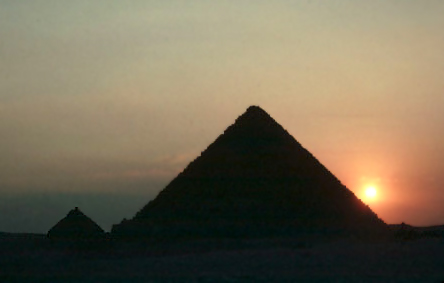
The remains of his pyramid in Abydols were discovered in 1899 and identified in 1902. Ahmose’s mummy was discovered in 1881 within the Deir el-Bahri Cachet which is near the hills by Mortary Temple of Hatshepsut. He was among other mummies that were dynasty leaders in the 18th and 19th dynasty. The mummy was unwrapped by Gaston Maspero on June 19, 1886. His remains appeared to be smashed by robbers. Mr. Maspero stated that he was of medium height but because of the development of his neck and chest, it was believed that he was very strong. Mummifications existed in other cultures. The Egyptians believed in the eternal life and this meant preserving the body forever.
Subscribe to:
Posts (Atom)